
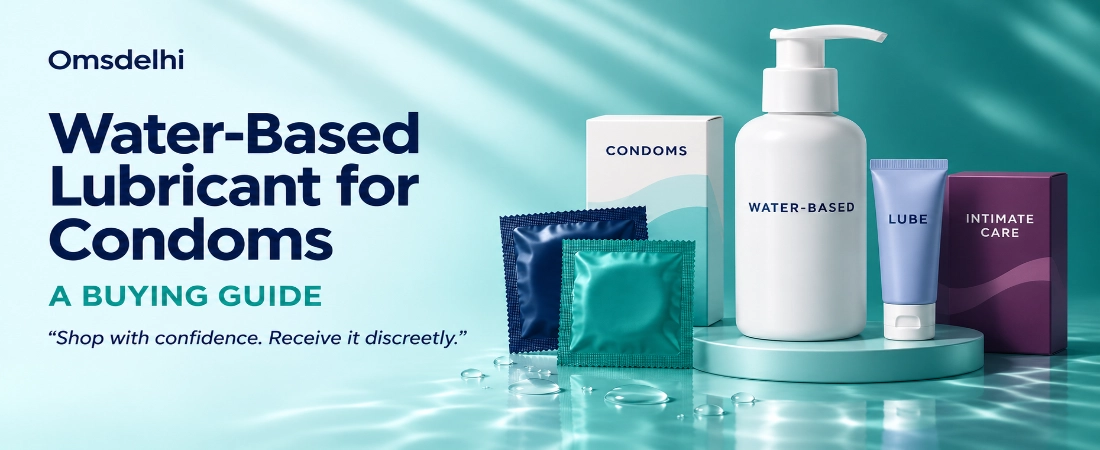
Water-Based Lubricant for Condoms: A Buying Guide
When you’re choosing a water-based lubricant for condoms, start with two labels. Check what your condom is made of, then check whether the lubricant is compatible with that material. Once the labels agree, choose the texture and pack size that suit you.
Water-based lube helps reduce friction during sex. It’s a practical option when you want extra lubrication, even if the condom is already lubricated.
Is water-based lubricant safe to use with condoms?

Yes, water-based personal lubricants are generally suitable for latex condoms. Always follow the directions on both packs. Petroleum jelly, coconut oil, baby oil, massage oils and oil-based body lotions can weaken latex and make a condom more likely to break.
“Latex-free” doesn’t mean “safe with oil.” Some non-latex condoms, including polyisoprene condoms, can also be damaged by oils. If you’re comparing options in the condom collection, check the material on the exact pack rather than relying on the brand name or the words “latex-free.”
What to check before buying a lubricant

| What to check | What to look for |
|---|---|
| Condom compatibility | A water-based personal lubricant with clear directions for use with your condom material. |
| Ingredients | If fragranced or warming products have irritated you before, start with a plain formula and check for ingredients you know you react to. |
| Texture | Choose a thinner liquid or a thicker gel based on what feels comfortable. Thickness doesn’t tell you whether a product is compatible with condoms. |
| Pack size and expiry | A smaller tube makes sense if you’re trying a formula for the first time. Check the expiry date and storage instructions before buying. |
When browsing lubricants and sexual wellness oils, look for a product specifically labelled as a water-based personal lubricant. A massage oil and a personal lubricant can appear in the same category, but they aren’t interchangeable. If a listing doesn’t show compatibility information, check the pack or ask the seller before ordering.
How to use water-based lube with an external condom
- Check the condom first. Make sure the wrapper is intact and the condom is within its expiry date. Open it carefully without teeth or sharp objects.
- Put on a new condom before sexual contact. Follow the instructions on the condom pack.
- Apply compatible lubricant to the outside. Start with a small amount, following the lubricant’s directions. Add more if friction returns, and stop if you feel pain or irritation.
- Hold the condom at the base during withdrawal. Discard it after use. Use a new condom each time.
If the condom breaks or slips off, stop and put on a new one before continuing. If there may be a risk of pregnancy or STI exposure, contact a pharmacist or sexual health service promptly for advice.
What if dryness or irritation keeps coming back?
A water-based lubricant can make sex more comfortable when occasional vaginal dryness causes friction. A vaginal moisturiser is a different product intended for ongoing dryness. Don’t assume it is suitable for use with condoms unless the label says so.
Stop using a product that causes burning or irritation. If dryness persists for several weeks despite self-care, or if you notice unusual discharge or bleeding, speak to a healthcare professional.
Shop for condoms and lubricant online
Omsdelhi is a sexual wellness store where you can compare personal lubricants and condoms before ordering. If you’re considering Durex Love Sex Air Ultra Thin Condoms, the product listing identifies them as natural rubber latex. Choose a personal lubricant labelled as compatible with latex and check both packs before use.
Frequently Asked Questions
Can I add water-based lube to a pre-lubricated condom?
Yes, if the lubricant is compatible with the condom. Apply a small amount to the outside and follow the directions on both packs.
Can I use silicone-based lubricant instead?
Many latex condoms can be used with silicone-based lubricant, but check both manufacturers’ instructions to make sure the products are compatible.
Is petroleum jelly a substitute for water-based lubricant?
No. Petroleum jelly is oil-based and can weaken latex condoms, even if you only use a small amount.
Does water-based lube prevent pregnancy or STIs?
No. Lubricant reduces friction. It does not act as contraception or provide a barrier against sexually transmitted infections.








Leave a Reply
You must be logged in to post a comment.