Choosing the Right Sexual Lubricant for You
A water based lubricant can make intimacy feel smoother, more comfortable, and easier to enjoy, especially when dryness, friction, condoms, or toys are part of the experience. Sexual lubricants are not only for “problems”; they are everyday personal lubricants that can support comfort, play, and confidence. This guide from Omsdelhi, an online sexual wellness store, explains the main types, how to compare them, and what to check before buying.
What does a sexual lubricant actually do?
A sexual lubricant reduces friction during intimate touch, sex, or toy use, which may help make the experience more comfortable. That is the established purpose: lube adds glide where the body may not produce enough natural moisture, or where extra slickness simply feels better. As a general recommendation, choosing the right lubricant depends on how you plan to use it, your skin sensitivity, condom use, and whether sex toys are involved.

Lubricants can be useful for many common situations: longer sessions, condom use, hormonal dryness, stress-related dryness, postpartum changes, menopause, masturbation, anal play, or simply adding a different sensation. They do not diagnose or treat medical conditions. If you have persistent pain, bleeding, burning, unusual discharge, repeated irritation, or allergic reactions, it is best to speak with a qualified healthcare professional.
The main types of sexual lubricants
Most personal lubricants fall into a few practical categories. No single option is the “best” for everyone, so it helps to match the formula to the situation rather than buying based on a label alone.
Water-based lubes
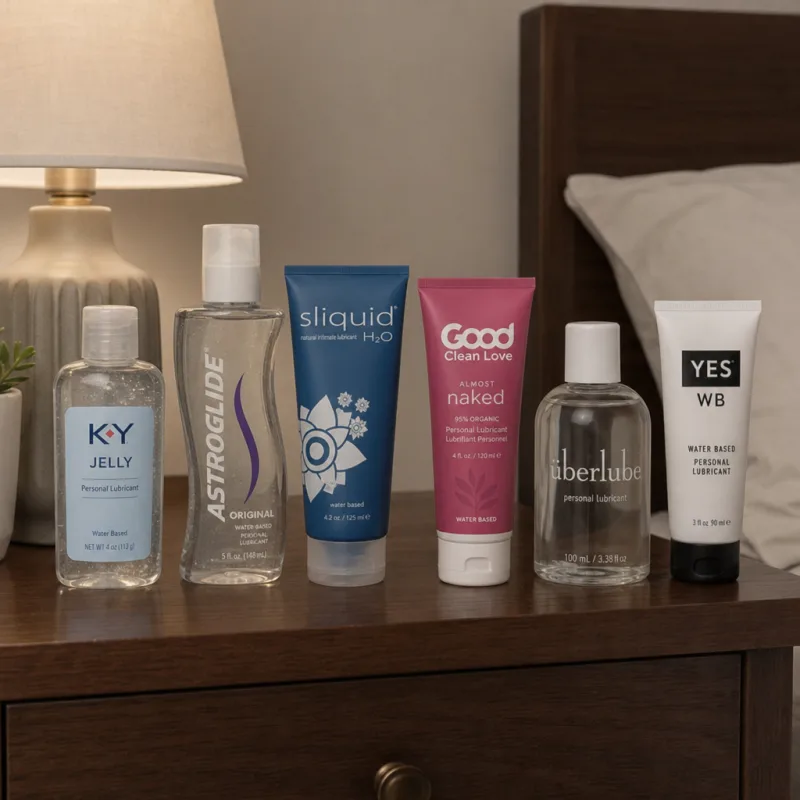
Water-based lubes are popular because they are easy to use, easy to wash off, and generally compatible with latex condoms and most sex toys. They may dry out faster than other types, so you might need to reapply during longer sessions. If you want a simple first choice, a water based lubricant such as K-Y Jelly is often the easiest place to start.
Some formulas include glycerin, flavors, warming ingredients, or thicker textures. These can be enjoyable for some people, but those with sensitive skin may prefer a simpler formula with fewer extras. The practical tip is simple: start small, check how your body responds, and avoid assuming that “more ingredients” means “better.”
Silicone lubricants
Silicone lubricants usually feel slick for longer than water-based options and are less likely to dry out quickly. They can be helpful for shower play or situations where longer-lasting glide matters. However, silicone lube may not be suitable for all silicone sex toys because it can affect the toy surface, so checking the toy manufacturer’s guidance is a smart step.
Silicone formulas also take more effort to wash away. For some people, that long-lasting feel is a benefit; for others, it may feel too heavy. This is why testing a small amount first is a sensible recommendation.
Oil-based and hybrid options
Oil-based lubricants can feel rich and smooth, but they should not be used with latex condoms because oils can weaken latex. They may also be harder to wash off and may not suit people prone to irritation. Hybrid lubes combine qualities from different bases, often water and silicone, but compatibility still depends on the product formula.
If condoms are involved, check the label carefully. For safer product selection, avoid guessing based on texture or marketing words.
Why is a water based lubricant often the best first choice?
A water based lubricant is often recommended as a first choice because it is versatile, easy to clean, and usually works well with condoms and toys. That does not mean it is perfect for every person or every type of intimacy, but it suits many common needs without creating complicated compatibility issues. For everyday use, first-time buyers, and people comparing the best lubricants for comfort, water-based formulas offer a practical starting point.
Here is when water-based options often make sense:
- Condom use: Many water-based formulas are suitable for latex condoms, but always read the label.
- Toy use: They are usually a safer match for a wide range of toy materials.
- Easy cleanup: They rinse away more easily than silicone or oil-based lubes.
- Sensitive preferences: Simple, fragrance-free versions may suit people who prefer fewer added sensations.
- Beginner-friendly use: They are familiar, widely available, and easy to reapply.
A small drawback is that water-based formulas can dry out during longer play. The easy fix is to reapply a little more, or add a few drops of water if the product directions allow it.
Natural lubricants, organic lubes, and sensitive skin
Natural lubricants and organic lubes appeal to people who prefer plant-derived ingredients or fewer synthetic additives. These labels can be helpful, but they do not automatically mean a product will suit every body. Poison ivy is natural, for example, but that does not make it skin-friendly; the same logic applies to intimate products.
If you have sensitive skin, focus less on buzzwords and more on the ingredient list. Look for formulas that are fragrance-free, dye-free, and designed for intimate use. Avoid using household oils, lotions, petroleum jelly, or food products as intimate lubricants, especially with condoms or internal use, because they may irritate skin or affect condom safety.
A simple patch test can help: apply a small amount to the inner arm and wait to see if irritation develops. This is not a guarantee against intimate sensitivity, but it is a cautious first step. If irritation happens after using any lubricant, stop using it and consult a healthcare professional if symptoms persist.
Matching lube to the moment
The best lubricants are the ones that fit the activity, the people involved, and the products being used. A formula that works beautifully for massage may be wrong for condoms. A flavored option may be fun for oral play but not ideal for someone prone to irritation.
Use this quick buying checklist before choosing:
- Check condom compatibility. If you use latex condoms, avoid oil-based lubes and choose a product clearly marked condom-safe.
- Check toy compatibility. Water-based is usually the simplest choice for toys; be cautious with silicone lubricants on silicone toys.
- Consider texture. Thicker lubes may feel better for anal play or longer glide, while thinner lubes may feel more natural for some users.
- Think about ingredients. Fragrance, warming agents, sugars, and strong flavors may bother sensitive skin.
- Choose the right size. If you are trying a new product, a smaller bottle can reduce waste.
- Notice your body’s response. Comfort matters more than trends, packaging, or claims.
For anal play, extra lubrication is especially important because the anus does not self-lubricate in the same way as the vagina. A thicker water-based or silicone formula may be preferred, depending on condom and toy use. Go slowly, communicate, and stop if there is pain.
Flavored lubricants and when to use them
Flavored lubricants are mainly designed to make oral play more enjoyable. They can add novelty and reduce taste-related discomfort for some people. However, they are not always the best choice for vaginal or anal use, especially if they contain sugars, strong flavoring agents, or ingredients that cause irritation.
A practical recommendation is to keep flavored lube for external or oral use unless the label clearly says it is suitable for the intended area. If you are sensitive, choose mild flavors and avoid warming or tingling formulas until you know how your skin responds. Pleasure products should feel comfortable, not distracting or irritating.
Shopping for sexual lubricants without confusion
When people search terms like “sexual lubricants cvs,” “personal lubricants near me,” or “best water-based lubes,” they are often trying to compare convenience, privacy, ingredients, and price. Physical stores can be useful when you need something quickly. Online sexual wellness stores like Omsdelhi may make comparison easier because you can take time to read product details privately.
The India sexual lubricants market has also become more visible as conversations around sexual wellness become more open. For shoppers, that means more variety—but also more labels to interpret. Instead of chasing the most popular product, read the basics: lubricant base, condom compatibility, toy compatibility, ingredients, intended use, and any warnings.
A good product page should help you understand what you are buying without pressuring you. If the description is vague, overpromises results, or does not mention compatibility, consider that a reason to pause.
Established facts vs practical recommendations
Some points about sexual lubricants are well established. Water-based lubes are generally easy to wash off. Oil-based lubes can damage latex condoms. Silicone lubricants often last longer than water-based formulas. Lubricants reduce friction but do not replace medical care for persistent pain or irritation.
Other points are personal recommendations, not universal rules. For example, starting with a water based lubricant is a practical suggestion because it works for many common situations. Choosing fragrance-free lube for sensitive skin is also a cautious recommendation, not a guarantee. The most reliable approach is to combine label reading, comfort, and professional advice when symptoms suggest something more than ordinary dryness.
FAQs about sexual lubricants
1. Which lubricant is best for beginners? A water based lubricant is often the easiest beginner option because it is simple to use, easy to clean, and usually compatible with condoms and toys. Choose a mild, fragrance-free formula if you are unsure.
2. Are water-based lubes safe with condoms? Many water-based lubes are suitable for latex condoms, but always check the product label. Do not assume every product is condom-safe unless it clearly says so.
3. What is the difference between water-based and silicone lubricants? Water-based lubes are easier to wash off and more toy-friendly. Silicone lubricants usually last longer and resist water better, but they may not suit some silicone toys.
4. Can I use oil as a sexual lubricant? Avoid oils with latex condoms because oil can weaken latex. Household oils may also irritate intimate skin, so products made specifically for sexual use are usually a better choice.
5. How much lubricant should I use? Start with a small amount and add more as needed. Using too little can create friction, while using too much may feel slippery in a way you do not enjoy.
6. Why does lube sometimes cause burning or irritation? Irritation may happen because of fragrance, flavoring, warming ingredients, preservatives, or personal sensitivity. Stop using the product and speak with a healthcare professional if symptoms continue.
7. Are organic lubes always better? Not always. Organic lubes and natural lubricants may suit some preferences, but the full ingredient list and your body’s response matter more than the label alone.
8. Can flavored lubricants be used internally? Some can, but many are better suited for oral or external play. Check the label, especially if you are sensitive or prone to irritation.
9. How should I store personal lubricants? Store them in a cool, dry place with the cap closed. Do not use a product that smells unusual, changes texture, or is past its expiry date.
A comfortable choice is an informed choice
Choosing sexual lubricants is less about finding one perfect product and more about matching the formula to your body, your partner, and your plans. If you want a flexible first option, a water based lubricant is a sensible place to begin; if you need longer-lasting glide, silicone lubricant may be worth considering. Read labels, choose comfort over hype, and seek medical guidance for ongoing pain, irritation, or unusual symptoms. With a calm, informed approach, buying from a trusted sexual wellness source such as Omsdelhi can feel simpler and more private.